

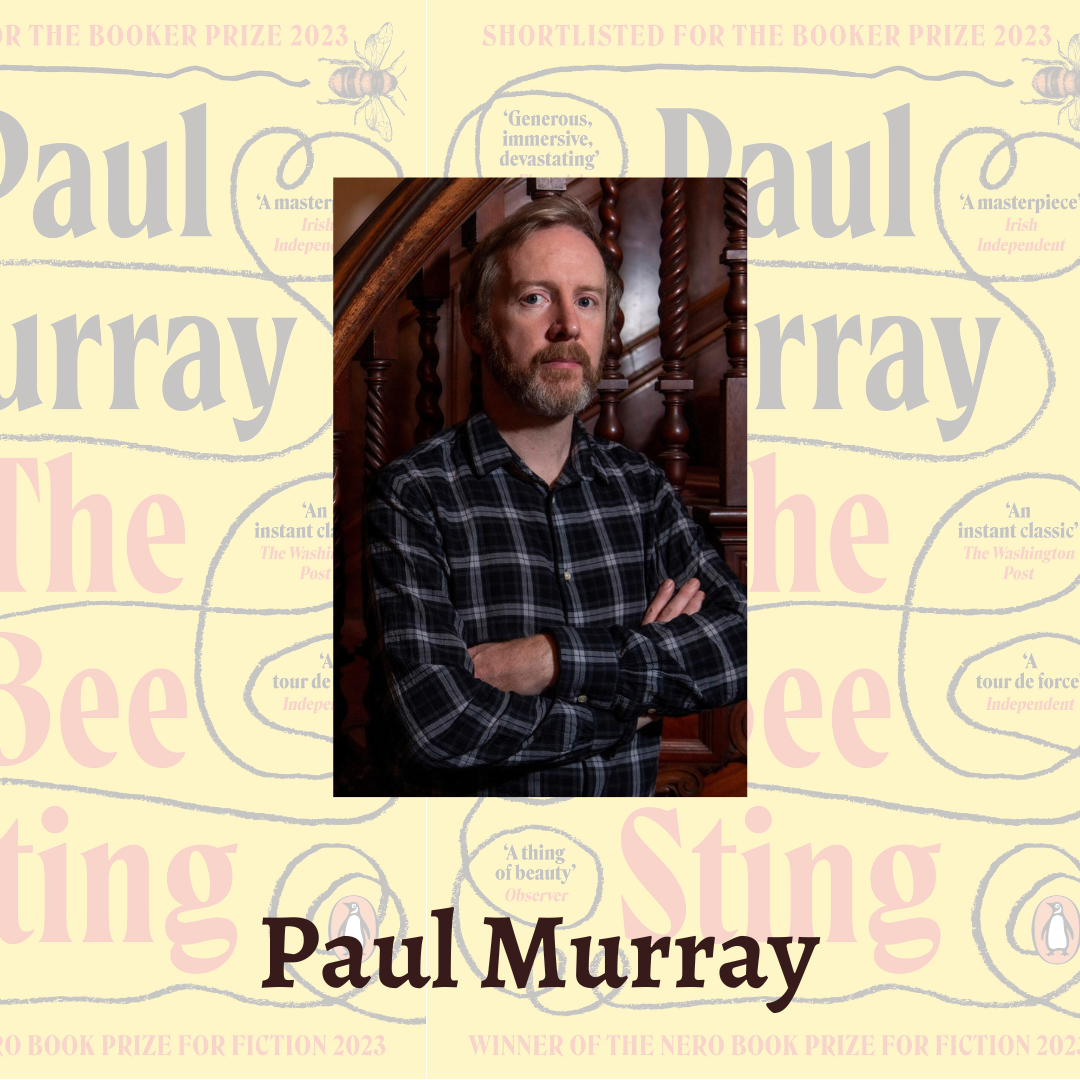
What does a day in the life of Paul Murray look like?
Hi Lisa Jean! And thank you for your questions. When I’m working on a book my days don’t vary much – I usually start work around 10 and keep going till 2. That’s the best part of the day for me. After lunch I’ll usually write emails or do some research, or sometimes I’ll work on a screenplay. Quality tends to drop if I work on the same thing all day, so I try to mix it up.
What does your writing set-up look like; do you have any practices, rituals, or habits that set you up for a writing-session?
I like to have a good routine – I think it was Norman Mailer who said that if you write at the same time every day, your brain will get used to producing, so even on mornings when you feel exhausted/ill/hungover, you find you’re able to work. Before I start work I try and get some fresh air, and after I wrap up I’ll go for a run or something. Writing a novel can be a real marathon, so you have to take care of yourself.
Did you always want to be a writer?
I always wrote, certainly – when I was a child I used to make little books. It just seemed like a natural continuation of reading. In school I wrote a lot of sketches and scripts and comics, mostly for my own entertainment. Then in college, I gravitated back to stories again and started getting more serious about writing generally. I wrote a novel in the year after I graduated, but nothing happened with that. I didn’t think I’d ever get published.
The owner of Unity Books, Jo, views bookselling as a very niche, very important matchmaking process that has the power to change lives in small but wonderful ways- a bit like Tinder! Who is your ideal reader or perfect match for The Bee Sting? (Despite half of the world absolutely loving it..!) And did you consider that ‘person’ while writing it?
I totally agree with Jo, the bookseller plays a major part in bringing readers and books together, though TBH it may be a disservice to compare booksellers to Tinder, which I believe is now regarded as a bit of a racket.
I didn’t have an ideal reader for The Bee Sting. Imagining readers and their reactions tends to have a chilling effect on the creative process. Would they like this bit? How about this bit? Should it be funnier? Sadder? And so on. My job is to be true to the story and to tell it as faithfully as I can. So I try not to consider what anyone’s going to make of it. To come back to your Tinder analogy, I think a similar principle applies – I mean, the less of an image you have in your head, the more willing you are to be surprised, the more success you’ll have.
I never expected this book to take off the way it has – it’s been a wonderful experience to see people so far removed from the midlands of Ireland finding something there they connect with. You never know with books – that’s the bottom line. Or with life. It’s all a mystery.
Your voice comes through very strongly in all four of your novels, especially The Bee Sting. How did you develop your writing voice, and who are your idols?
A novel is all about making a human connection, and the voice is what drives that, before you even get into character. I like books with a strong voice. When the voice is appealing, you’ll really go anywhere with it. For the writer, that creates a lot of leeway. When I was in school I remember reading The Catcher in the Rye over and over again. Holden Caulfield’s voice was so brilliantly achieved. Ali Smith’s novels always have a very compelling voice. Emmanuel Carrere, Claire Louise Bennett. In fact, I find it hard to think of a writer I love who doesn’t have a strong voice.
As to how I developed it – it’s not something I consciously set out to do. In Ireland people like to talk about the storytelling tradition and how it lives on in the way we talk to each other. Irish people do love to spin yarns and without wanting to generalise I feel being in that environment you absorb a basic sense of what you need to make your story compelling. The language of daily life is so rich and if you can find a way to get it down on paper then you’re halfway there.
There are multiple very distinct points of view in The Bee Sting, each so accurate and insightful that at times I wondered if you had found contemporary prodigies and held them captive until they wrote Cass and PJ’s parts of the story! How did you achieve such a depth of feeling for each family member, especially the children, and accurately delve into each person’s gender, social quirks, and personality?
Well, that’s the writer’s job, really. Whoever you’re writing about, you’re trying to see through their eyes and feel what they feel. If you can’t do it, then that character’s not going to come to life. If you can, that character will bring you and the reader to places you never expected. That’s the miracle of empathy! The book doesn’t have a Message, per se, but one thing you might pick up from it is that people aren’t so different from each other, despite appearances. Each member of the Barnes family sees the others as incomprehensible. But the reader can see all the resonances that they overlook. Sometimes they think almost identically, they go through similar experiences and have the same fears and reactions despite being decades apart. They just don’t realize it because they don’t talk to each other. Talking to people, or more specifically listening to people, is a good skill to develop if you want to write.
Ireland has a very strong presence in the worldwide literary canon at the moment, and in fact always has. Yourself, Colum McCann, Sínead Gleeson, and Kevin Barry- to name a few- have been dominating our Top 10 bestsellers for the last few months. With all the world to choose from, what do you think attributes to this?
I mentioned storytelling above, and that’s probably the big one – it’s a small country with strong communities where people do talk to each other and stories emerge from that. Or to look at it from a different angle, Ireland was historically a very poor country, and writing – compared to film, say – is an art form that doesn’t require a lot of infrastructure. It’s a means of expression that’s available where other means are not. In the Irish use of English, you see a colonised people pushing the language of the Empire into all kinds of twisted shapes it was never meant to take. Like I say, that’s a historical argument, but those things stay in the bloodstream, and might go some way to explaining why Irish writers are still having success today, when writers from elsewhere have had their minds overwritten by the internet.
As a young writer, I’d love to ask if you have any advice or tips on how to write like you, or what you think has led to your incredible writing style & quality. If you could have a conversation with your younger self, what would you tell him?
I’d tell my younger self what I tell anyone who wants to write. There aren’t really any hacks or shortcuts or magic potions. Writing’s like anything else – it comes down to hard work. What that means in practice is revision. Your first draft is not going to cut it. You have to go over it again and again before it all flows. That might sound demoralizing on the face of it - that there’s no quick way to produce a masterpiece – but it’s actually (I’ve learned) a positive thing, because it means no matter how inherently doomed and hopeless your manuscript seems, you can always make it better. Whatever problems your work has, you can fix them. If you write every day, you’ll be able to get to the finish line. So don’t lose faith in yourself. Faith is the most important quality for a writer to develop. Other people may criticise your work, but the only person who can stop you writing is YOU. Don’t listen to the voice inside that says this is impossible, that says you’re not good enough. Keep believing, keep writing, make it a cornerstone of your day, and you’ll find sooner or later it will happen. But that’s a lesson you’ll need to learn again and again over your career.
Have you been to New Zealand? If so, can you tell me a bit about your trip, and if not, would you like to come sometime?
I visited Australia last year but unfortunately, I wasn’t able to make it to New Zealand. It’s somewhere I’ve always wanted to visit – I feel like it has some affinities with Ireland. Some day!
Other News & Events
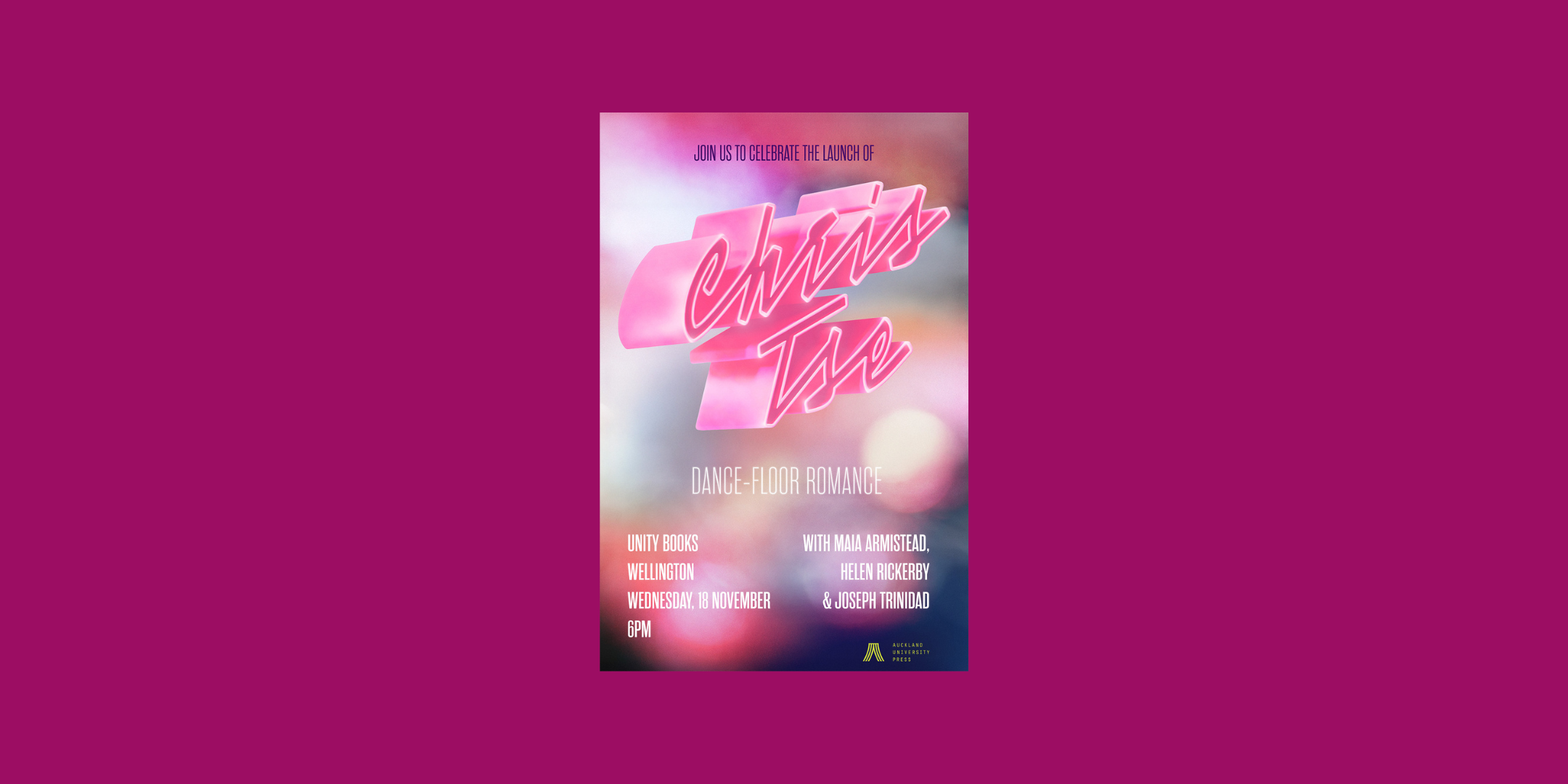
Book Celebration: Dance-Floor Romance by Chris Tse
18 Nov 2026 - 6PMIn-store 6pm, Wednesday 18th November, Unity Books Wellington, 57 Willis St. All Welcome

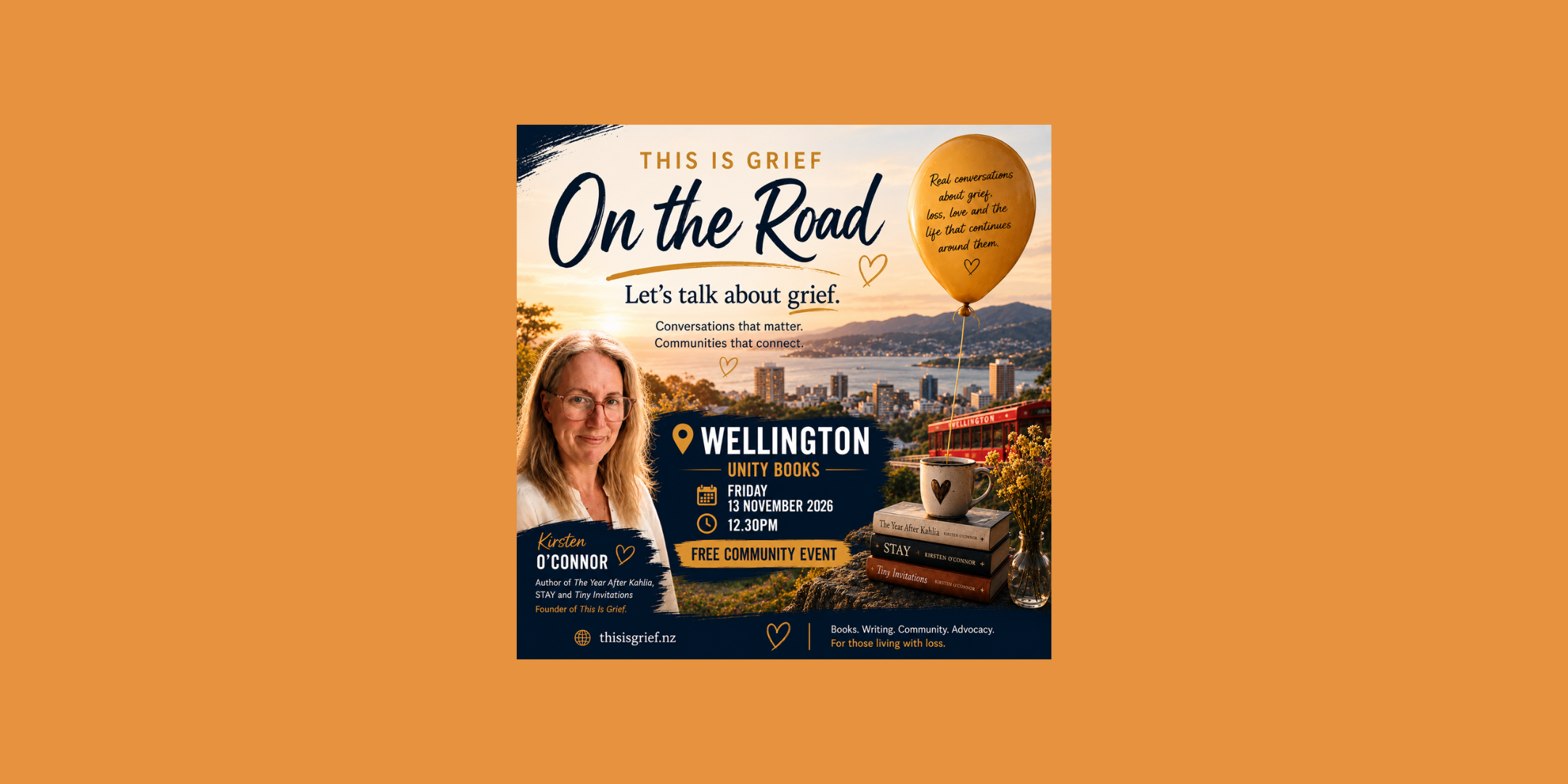
AUTHOR TALK: This is Grief by Kirsten O'Connor
13 Nov 2026712.30PM, Friday November 13th, 2026 Unity Books Wellington, 57 Willis St. All welcome, take a seat!
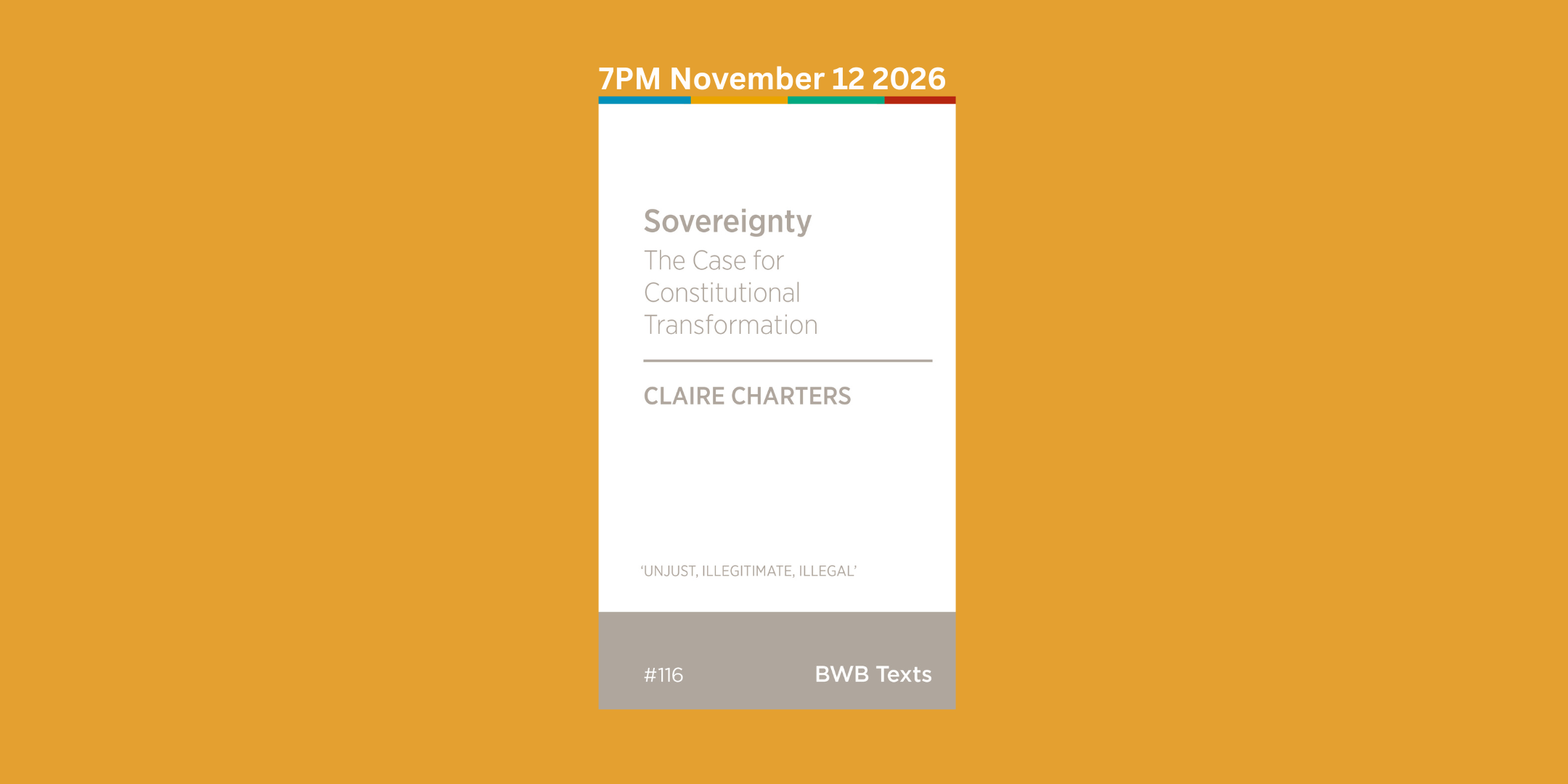
AUTHOR TALK: Sovereignty by Claire Charters
12 Nov 20267pm, Thursday November 12th, 2026 Unity Books Wellington, 57 Willis St. All welcome, take a seat!